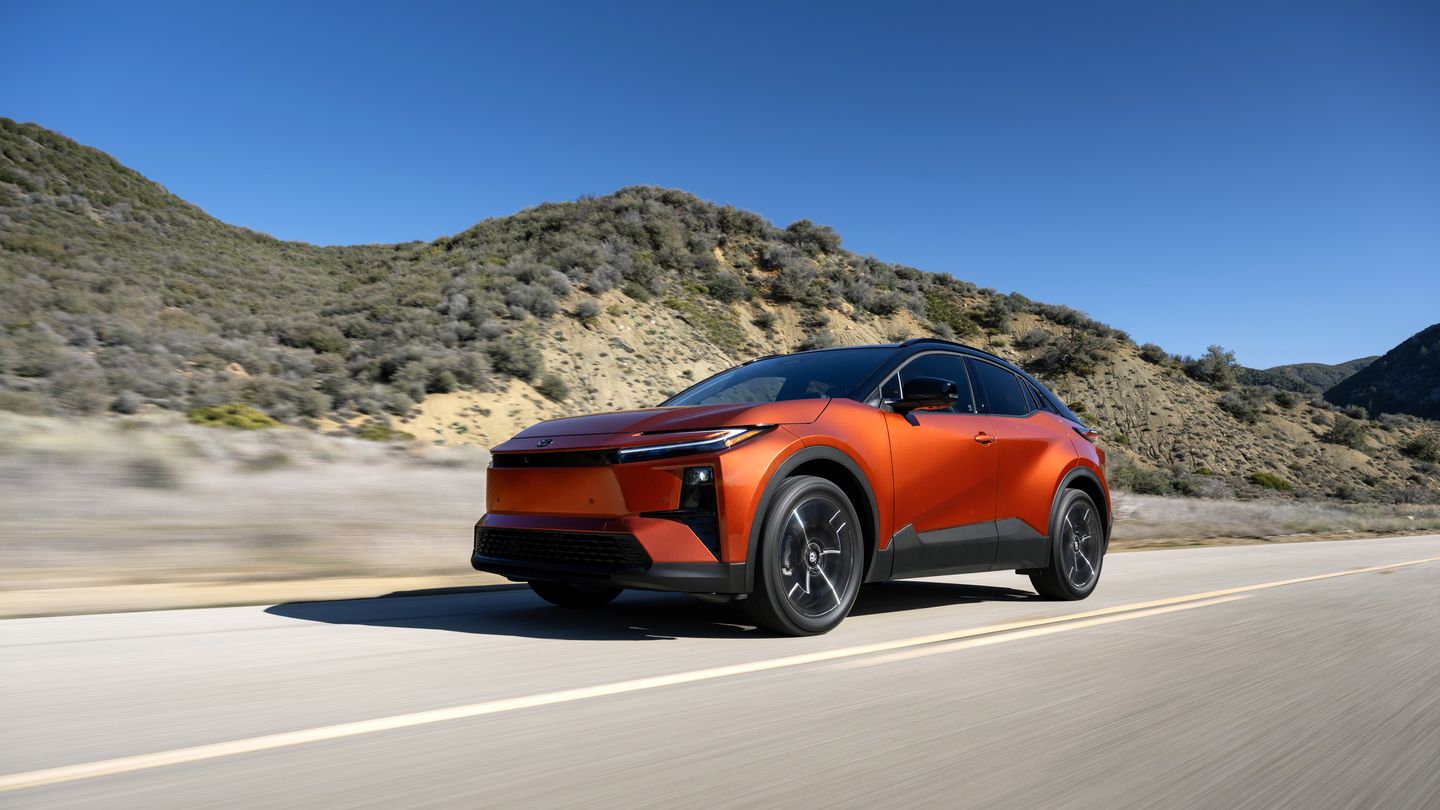
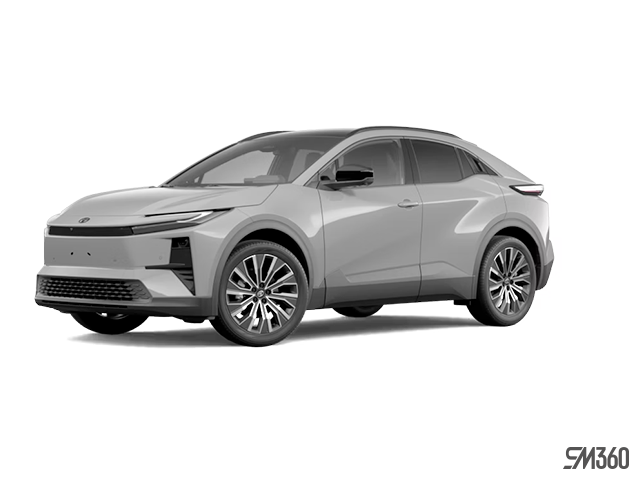
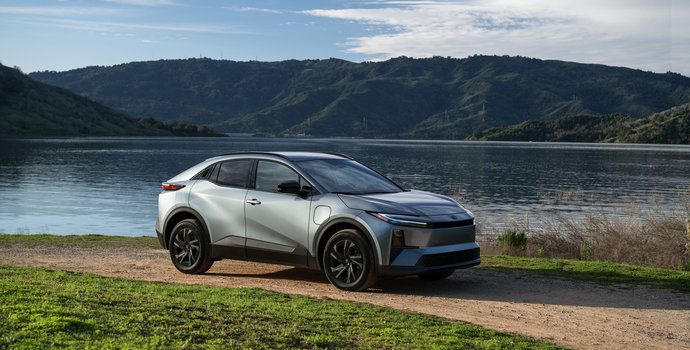
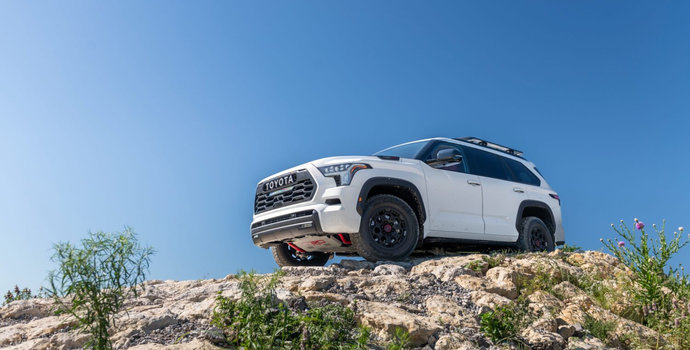
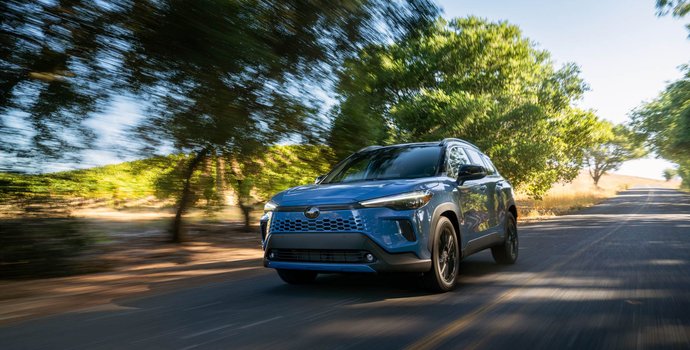
Toyota now offers Canadian shoppers two distinct paths into electrified driving in the compact SUV space: the 2026 RAV4 Plug-in Hybrid and the all-new 2026 C-HR Battery Electric Vehicle. Both deliver strong performance, modern technology, and the option of all-wheel drive, but they take very different approaches to electrification.
Shop Hybrid and EV Inventory
This comparison breaks down where each model fits, what the powertrains deliver, and how the trims line up — so you can decide which Toyota matches your driving habits, charging setup, and weekly routine.
At a Glance: 2026 RAV4 Plug-in Hybrid vs. 2026 C-HR BEV
|
Specification
|
2026 RAV4 Plug-in Hybrid
|
2026 C-HR BEV
|
|
Powertrain
|
2.5 L 4-cylinder plug-in hybrid with two electric motors
|
Battery-electric (single motor FWD or dual motor AWD)
|
|
Maximum Horsepower
|
324 system net hp
|
338 system net hp (XSE AWD)
|
|
All-Electric Range
|
Up to 80 km (manufacturer-estimated)
|
Up to 496 km (manufacturer-estimated, SE FWD)
|
|
Drivetrain Options
|
Standard AWD on all four grades
|
FWD (SE) or AWD (XSE)
|
|
Battery
|
High-capacity plug-in hybrid battery
|
77 kWh lithium-ion
|
|
Towing Capacity
|
3,500 lbs (1,588 kg) on SE and XSE grades
|
Not towing-rated
|
|
Cargo Capacity (behind rear seats)
|
Generous compact-SUV cargo room
|
720 L
|
|
Available Trims
|
SE, XSE, XSE Technology Package, GR SPORT
|
SE (FWD), XSE AWD
|
Powertrains: Two Different Paths to Electrification
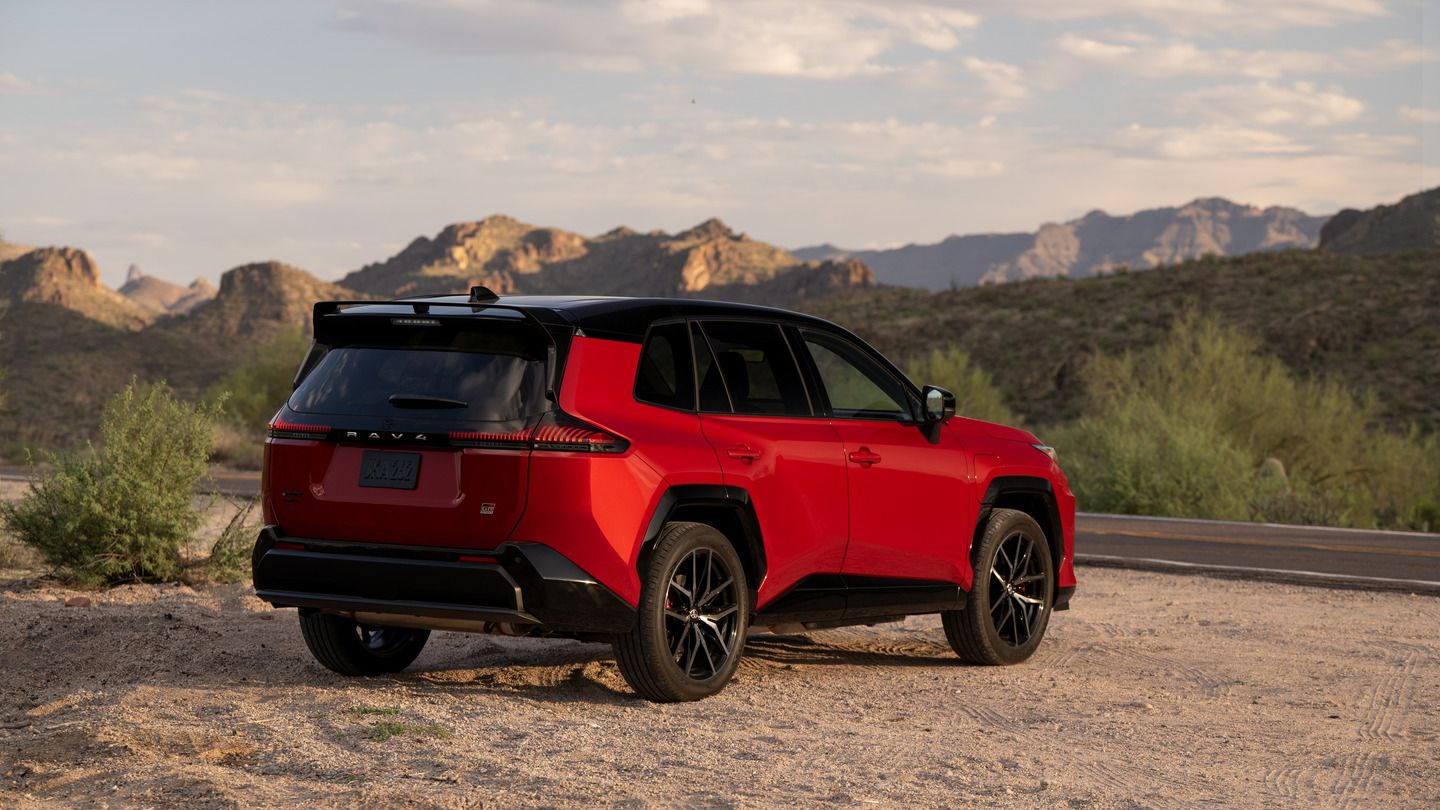
The RAV4 Plug-in Hybrid uses a plug-in hybrid system that combines a 2.5 L four-cylinder engine, two electric motors, a larger drive battery, and a high-output charger for 324 net horsepower. All four grades are equipped with standard all-wheel drive, and Toyota engineers added silicon carbide semiconductors in the front axle for improved efficiency and a longer all-electric range.
The C-HR BEV takes a fully-electric approach. It runs on a 77 kWh lithium-ion battery and uses Toyota's upgraded eAxles with silicon carbide semiconductors. The front-wheel drive SE delivers 221 system net horsepower, while the AWD XSE jumps to 338 system net horsepower and a manufacturer-estimated 0–100 km/h time of around 5.2 seconds. There is no gas engine — the C-HR runs on electricity only.
Range and Charging
This is where the difference between a plug-in hybrid and a battery-electric SUV matters most.
- The RAV4 Plug-in Hybrid offers up to 80 km of all-electric driving range on a manufacturer-estimated rating. After the battery is depleted, the gas engine takes over and the vehicle continues running as a hybrid — so range anxiety is essentially eliminated for longer trips.
- The C-HR BEV offers up to 496 km of all-electric range on the SE FWD model, or up to 465 km on the XSE AWD model. When the battery runs low, you charge it. There is no gas backup.
Charging hardware also differs across the lineup:
- RAV4 Plug-in Hybrid SE, XSE, GR SPORT: 7 kW on-board charger with J1772 connector for Level 1 and Level 2 charging
- RAV4 Plug-in Hybrid XSE Technology Package: 11 kW on-board charger with CCS1 connector that supports Level 3 DC fast charging (10–80% in approximately 30 minutes)
- C-HR BEV: 11 kW on-board charger with North American Charging System (NACS) port that supports Level 3 DC fast charging (10–80% in around 30 minutes under ideal conditions)
If you have access to home Level 2 charging and most of your daily driving falls within 80 km, the RAV4 Plug-in Hybrid covers the majority of your trips on electricity alone — and switches to hybrid mode for road trips. If you can charge at home overnight and don't need towing capability, the C-HR BEV is a true zero-tailpipe-emissions option with enough range to cover long commutes and weekend trips between charges.
Cargo, Utility, and Towing
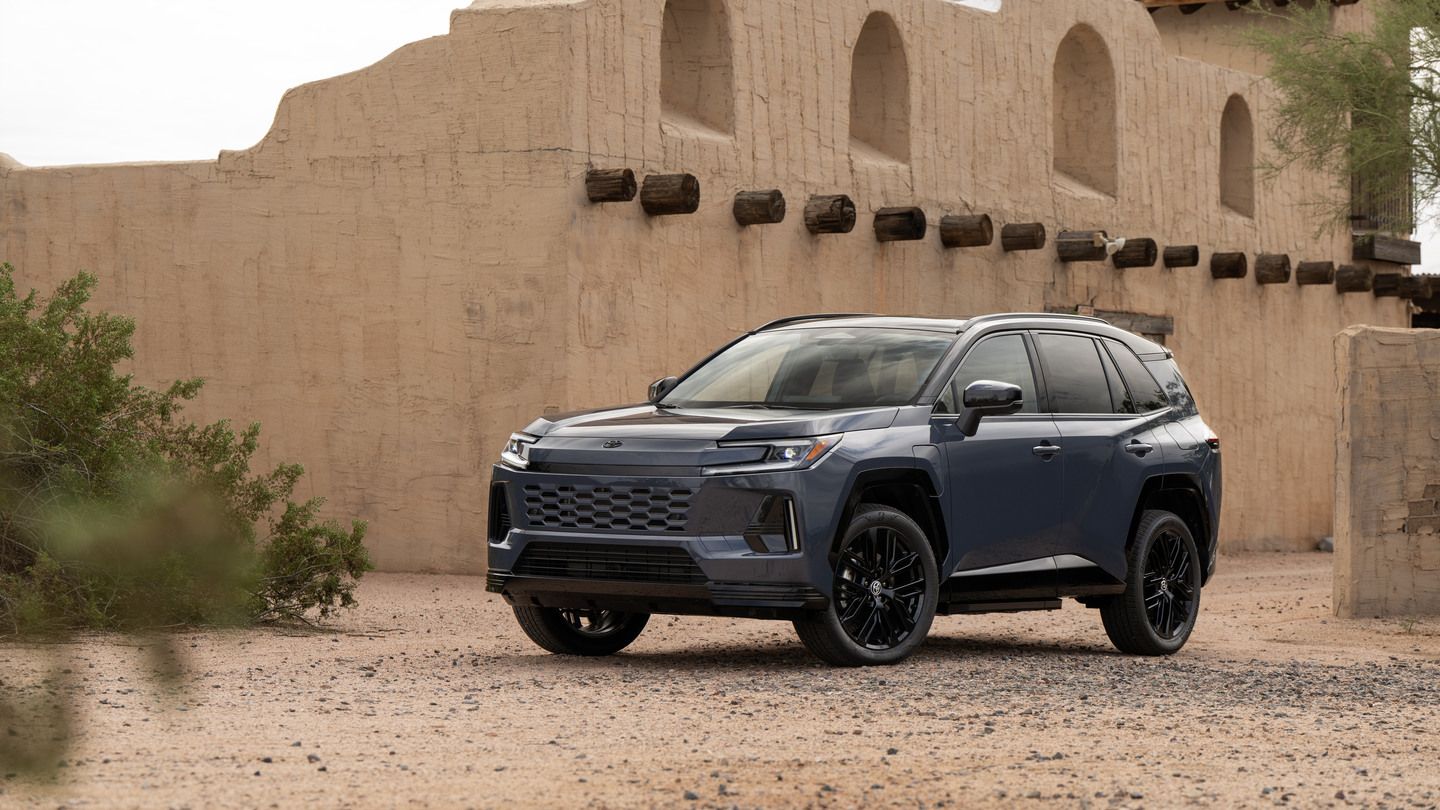
The RAV4 Plug-in Hybrid is the larger and more utility-focused of the two. It seats five, offers 60/40 split fold-flat rear seats, and adds a power moonroof and power back door across the lineup. Both the SE and XSE grades are rated to tow up to 3,500 lbs (1,588 kg) — useful for small trailers, jet skis, or a small boat. The XSE Technology Package and GR SPORT grades are not rated for towing.
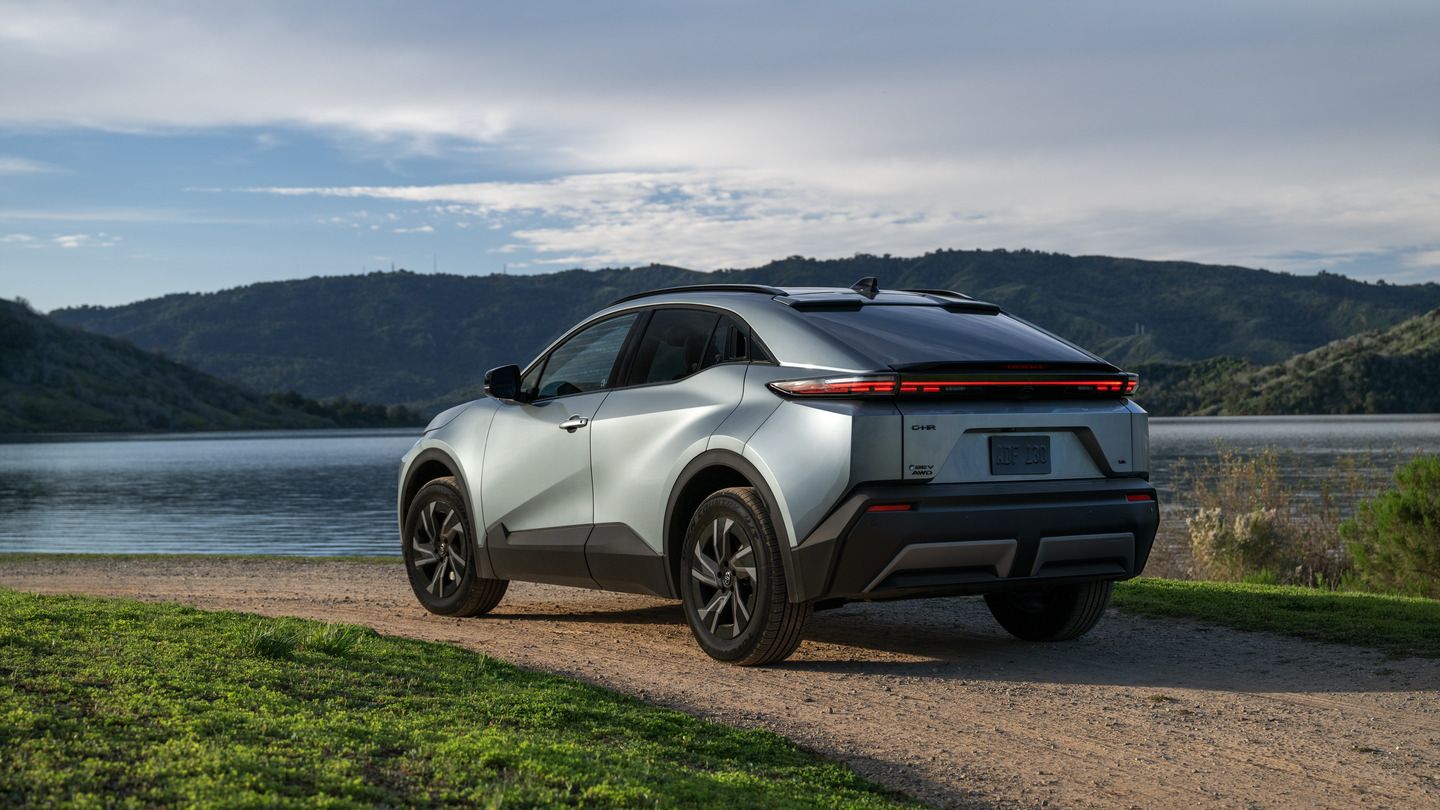
The C-HR BEV is a coupe-like compact crossover with 720 L of cargo space behind the rear seats and 60/40 split fold-flat seats for added flexibility. It is not towing-rated in Toyota Canada's documentation, so it is best matched to drivers who don't need to pull a trailer.
Trim and Feature Highlights
2026 RAV4 Plug-in Hybrid
- SE — 10.5-inch touchscreen, 18-inch alloy wheels, power moonroof, heated fabric front seats
- XSE — 12.9-inch touchscreen, 20-inch black alloy wheels, nine-speaker JBL Audio, heated and ventilated front seats, Panoramic View Monitor
- XSE Technology Package — Adds shift-by-wire, Advanced Park, Traffic Jam Assist, head-up display, panoramic moonroof, power back door, plus DC fast charging
- GR SPORT — GAZOO Racing treatment with sport-tuned suspension, performance dampers, red brake calipers, paddle shifters, GR interior
2026 C-HR BEV
- SE (FWD) — 14-inch Toyota Multimedia touchscreen, 18-inch wheels, power liftgate, heated front seats with eight-way power driver seat, two front wireless Qi chargers, NACS charging port
- XSE AWD — Adds 338 hp dual-motor AWD, available 20-inch wheels, available two-tone paint with Midnight Black Metallic roof, synthetic suede and SofTex-trimmed seating
Which Toyota Is the Right Fit?
The decision comes down to how you drive and how you charge.
- Choose the 2026 RAV4 Plug-in Hybrid if you: want all-wheel drive on every grade, need towing capacity up to 3,500 lbs (1,588 kg), regularly take road trips beyond the range of a typical EV battery, or prefer a backup gas engine for flexibility.
- Choose the 2026 C-HR BEV if you: want a true zero-tailpipe-emissions vehicle, can charge at home overnight, value the coupe-like styling, or prioritize a long single-charge range without towing needs.
Both share Toyota Safety Sense as standard (TSS 4.0 on RAV4 Plug-in Hybrid, TSS 3.0 on C-HR BEV), the Toyota Multimedia system with wireless Apple CarPlay and Android Auto compatibility, and Toyota's reputation for quality.
See Both at Orangeville Toyota
The clearest way to choose between these two electrified Toyotas is to see them side by side, sit in each cabin, and take both for a drive. Stop by Orangeville Toyota in Orangeville to book test drives in the 2026 RAV4 Plug-in Hybrid and the 2026 C-HR BEV. Our team can walk you through the charging setup, trim differences, and which model best matches your weekly driving routine.
You might also be interested in these blogs: